AI-powered diagnostics platform for healthcare providers
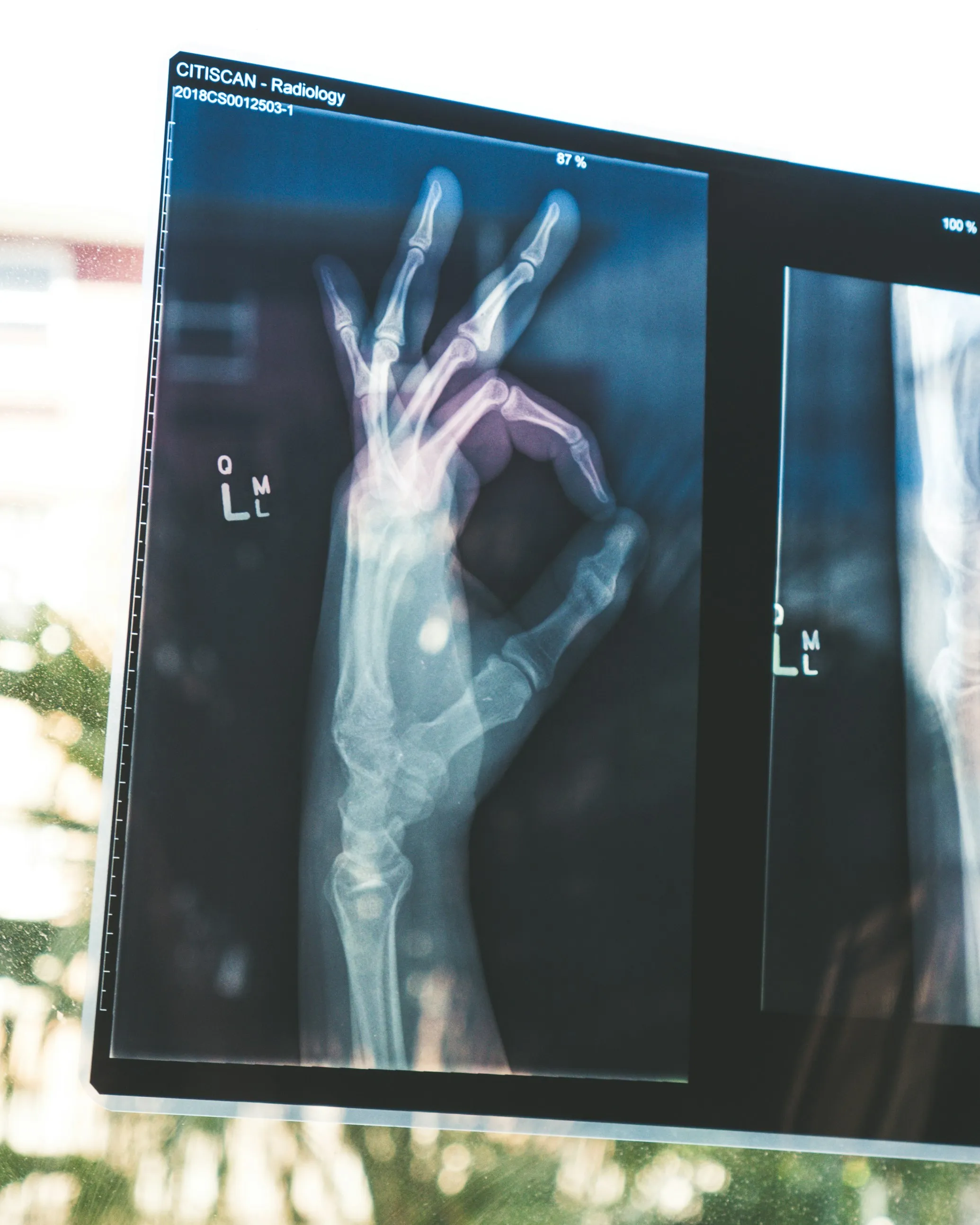
A visual representation of our digital transformation journey with global partners.
Precision medicine is rapidly transforming the healthcare industry, enabling clinicians to deliver more accurate, personalized, and timely care. Advances in artificial intelligence and data availability have opened new possibilities for early disease detection, particularly in complex clinical environments where traditional diagnostic methods may fall short.
Our client was a consortium of healthcare providers, including hospitals, diagnostic centers, and specialty clinics, serving a diverse patient population across multiple regions. Despite having access to large volumes of medical data, clinicians faced significant challenges in analyzing this information efficiently and consistently.
To address these challenges, the consortium partnered with us to design and implement an AI-powered diagnostics platform capable of supporting clinicians with faster, more accurate insights while seamlessly integrating into existing clinical workflows.
The Challenge
Early diagnosis plays a crucial role in improving treatment outcomes, reducing healthcare costs, and increasing patient survival rates. However, many diseases—particularly cancers, neurological disorders, and cardiovascular conditions—are difficult to detect in their early stages using conventional diagnostic techniques alone.
The healthcare providers faced several interconnected challenges:
- Manual analysis of medical images was time-consuming and prone to variability
- Growing volumes of imaging and patient data overwhelmed clinical teams
- Fragmented electronic health records limited holistic patient assessment
- Delayed diagnoses impacted treatment effectiveness and patient outcomes
- Strict regulatory and data privacy requirements constrained innovation
Clinicians needed a reliable decision-support system that could augment their expertise, reduce diagnostic delays, and maintain the highest standards of accuracy and compliance.
Our Approach
We designed and developed an AI-powered diagnostics platform built on advanced deep learning techniques. The platform was engineered to analyze medical images and structured as well as unstructured electronic health record (EHR) data to uncover subtle patterns that may indicate early-stage disease.
The solution was developed in close collaboration with clinicians and radiologists to ensure clinical relevance, interpretability, and trust. Rather than replacing human expertise, the platform was positioned as a decision-support tool that enhances clinical judgment.
Key elements of our approach included:
- Training deep learning models on large, anonymized clinical datasets
- Supporting multiple imaging modalities such as X-rays, MRIs, and CT scans
- Integrating EHR data to provide contextual patient insights
- Embedding explainability features to support clinical confidence
- Ensuring compliance with healthcare data security and privacy standards
We also focused on seamless integration with existing hospital systems to minimize disruption and encourage adoption across clinical teams.
Technology Stack
The platform was built using a robust and scalable technology stack optimized for high-performance data processing and AI workloads:
- Cloud-based infrastructure for secure and scalable deployment
- Deep learning frameworks for medical image analysis
- API-based integration with hospital information systems
- Secure data pipelines for EHR and imaging data ingestion
- Monitoring and governance tools for model performance and compliance
Results
The AI-powered diagnostics platform delivered significant improvements across clinical efficiency and patient outcomes. By automating and augmenting key diagnostic processes, clinicians were able to focus more time on patient care.
- 60% reduction in medical image analysis time
- Significant increase in diagnostic accuracy and consistency
- Earlier detection of critical conditions leading to better treatment outcomes
- Improved clinician productivity and reduced diagnostic workload
- Higher confidence in clinical decision-making through AI-assisted insights
Patients benefited from faster diagnoses, earlier interventions, and improved overall quality of care, reinforcing trust in both clinicians and healthcare institutions.
Looking Ahead
With the foundation in place, the consortium is now exploring advanced use cases such as predictive risk modeling, personalized treatment recommendations, and population-level health analytics. The platform has positioned healthcare providers to continue advancing precision medicine while maintaining the highest standards of safety, ethics, and regulatory compliance.
Ready to transform your business?
Our team of experts is ready to help you navigate the complexities of the digital landscape.
Work with us